<?xml version="1.0" encoding="utf-8"?><feed xmlns="http://www.w3.org/2005/Atom" ><generator uri="https://jekyllrb.com/" version="4.4.1">Jekyll</generator><link href="https://doremifaso.ca/feed.xml" rel="self" type="application/atom+xml" /><link href="https://doremifaso.ca/" rel="alternate" type="text/html" /><updated>2026-05-19T15:35:29-04:00</updated><id>https://doremifaso.ca/feed.xml</id><title type="html">do re mi fa so</title><subtitle></subtitle><author><name>Matt C</name></author><entry><title type="html">Harry yelled, Hermione shrieked, Ron grumbled</title><link href="https://doremifaso.ca/harry-yelled-hermione-shrieked-ron-grumbled/" rel="alternate" type="text/html" title="Harry yelled, Hermione shrieked, Ron grumbled" /><published>2024-09-08T00:00:00-04:00</published><updated>2024-09-08T00:00:00-04:00</updated><id>https://doremifaso.ca/harry-yelled-hermione-shrieked-ron-grumbled</id><content type="html" xml:base="https://doremifaso.ca/harry-yelled-hermione-shrieked-ron-grumbled/"><![CDATA[<p>We recently finished listening to Stephen Fry’s narration of the seven Harry
Potter books over a series of family road trips. He’s an excellent voice
actor, and it’s quite a feat, but we got tired of how shrill his voice became
every time he spoke Hermione’s dialogue. To be fair, the text itself is
clearly prompting this - she’s often described as shrieking or squeaking,
unlike Ron or Harry. This made me wonder exactly how much more often she is
written this way, so I decided to count.</p>

<p>I found a list of 134 synonyms for “said”, then searched the text of all seven
books to count how many times the words “Harry said” or “said Harry” occurred,
repeated this for Ron and Hermione, then did this again for each of the
synonyms on my list. I found “said” and 51 synonyms used 7085 times for these
characters over the million or so words in the series. By far the most common
term is “said”, which they each use between 80% to 85% of the time they speak.
The rest of the time, however, Rowling describes Hermione’s speech very
differently than Harry or Ron. All three often whisper and gasp, but it’s
almost exclusively Hermione who cries, screams, shrieks, squeals, squeaks,
wails, whimpers, sobs, giggles, or screeches (in that order of frequency). (To
be precise, Harry cries once and screams twice, but otherwise the above list
is unique to Hermione.) Only Ron grumbles, pipes up, complains, or howls, and
only Harry chuckles, frets, nags, states, thunders, or vents. Both Ron and
Harry often mutter, yell, or shout.</p>

<p>It’s clearly not just Stephen Fry who views Hermione this way, although he
does seem to speak her parts this way even more often than Rowling’s text
tells him to. As my partner helpfully pointed out, since dialogue for all
three is usually written with “said”, when Fry uses a shrieking voice the rest
of the time, it’s his own bias he’s adding on top of Rowlings’ already sexist
depiction of the character who seems to exist just to
<a href="https://the-toast.net/2015/10/13/a-harry-potter-where-hermione-doesnt-do-anyones-homework-for-them/">do everyone’s homework and emotional labour</a>.</p>

<p>For complete word counts, see the
<a href="https://docs.google.com/spreadsheets/d/1UTzaOViuQvWF8WIsdLJk8tbeelSE_g9SmxmMvgErfRE/edit?usp=sharing">source data</a>
in Google Docs.</p>]]></content><author><name>Matt C</name></author><summary type="html"><![CDATA[We recently finished listening to Stephen Fry’s narration of the seven Harry Potter books over a series of family road trips. He’s an excellent voice actor, and it’s quite a feat, but we got tired of how shrill his voice became every time he spoke Hermione’s dialogue. To be fair, the text itself is clearly prompting this - she’s often described as shrieking or squeaking, unlike Ron or Harry. This made me wonder exactly how much more often she is written this way, so I decided to count.]]></summary></entry><entry><title type="html">Fermented Hot Pepper Sauce</title><link href="https://doremifaso.ca/fermented-hot-pepper-sauce/" rel="alternate" type="text/html" title="Fermented Hot Pepper Sauce" /><published>2021-11-09T00:00:00-05:00</published><updated>2021-11-09T00:00:00-05:00</updated><id>https://doremifaso.ca/fermented-hot-pepper-sauce</id><content type="html" xml:base="https://doremifaso.ca/fermented-hot-pepper-sauce/"><![CDATA[<p>This is a simple and flexible fermented hot sauce you can make using hot
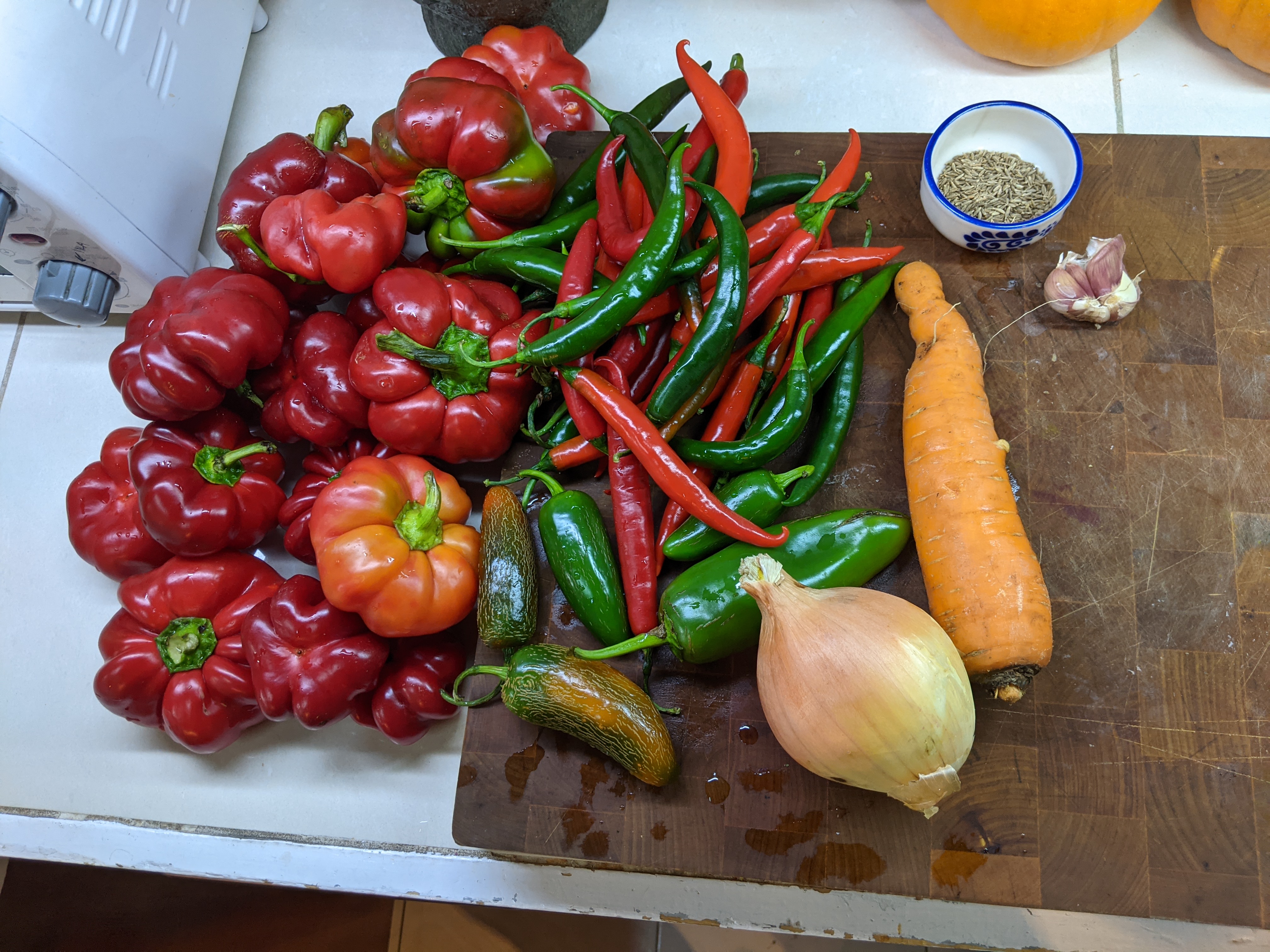
peppers, bell peppers, carrots, onions, tomatillos, or whatever else you have
on hand. I make it only in the fall during harvest season when all these
vegetables are plentiful and at their prime at our local farmer’s market, and
our basement is cool enough to ferment this properly. Most commercial hot
sauce you can buy simulates this sour fermented flavour using vinegar or other
acids so that it can be preserved for longer, but once you’ve tried a freshly
made batch you’ll see those are only a pale imitation of the real thing. This
sauce is an ephemeral pleasure which you should eat within a month or two,
unless you add half a teaspoon of powdered citric acid per litre as a
preservative, in which case it will last several months in the fridge.</p>

<p>I think about food pairings for our hot sauce collection the way some people
think carefully about wine. In this case, I would suggest using this with
eggs, potatoes, or a pasta dish with a simple tomato sauce.</p>

<h2 id="ingredients">Ingredients</h2>

<p>All amounts here can be adjusted according to taste except for the salt.</p>

<ul>
  <li>Hot peppers (but see note below about controlling for the level of heat)</li>
  <li>Bell peppers</li>
  <li>Onions</li>
  <li>Carrots</li>
  <li>Garlic</li>
  <li>Cumin seeds</li>
  <li>Salt (in proportion to total weight of vegetables; see below)</li>
</ul>

<h2 id="preparation">Preparation</h2>

<ul>
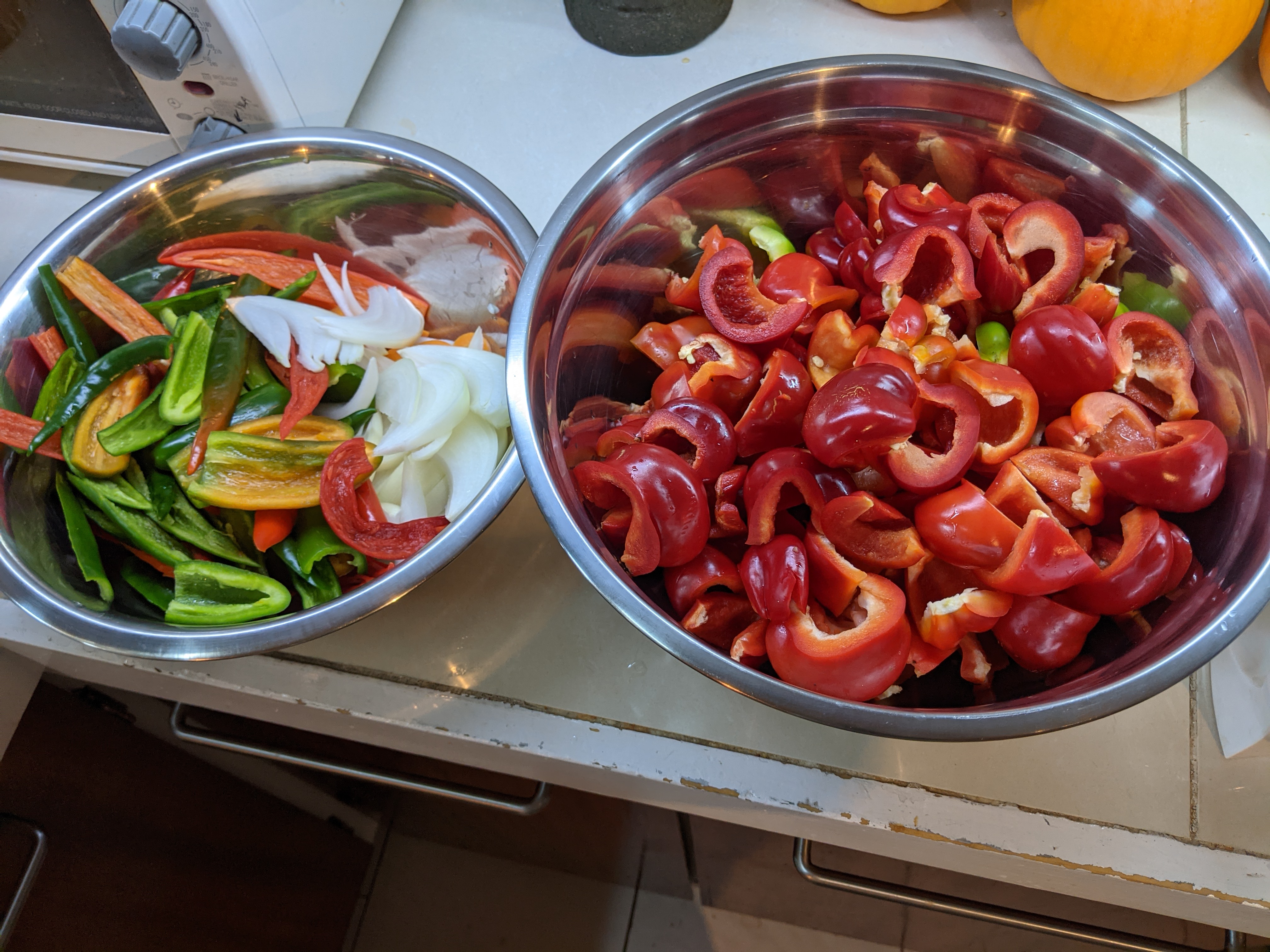
  <li>Wash and coarsely chop all ingredients.
    <ul>
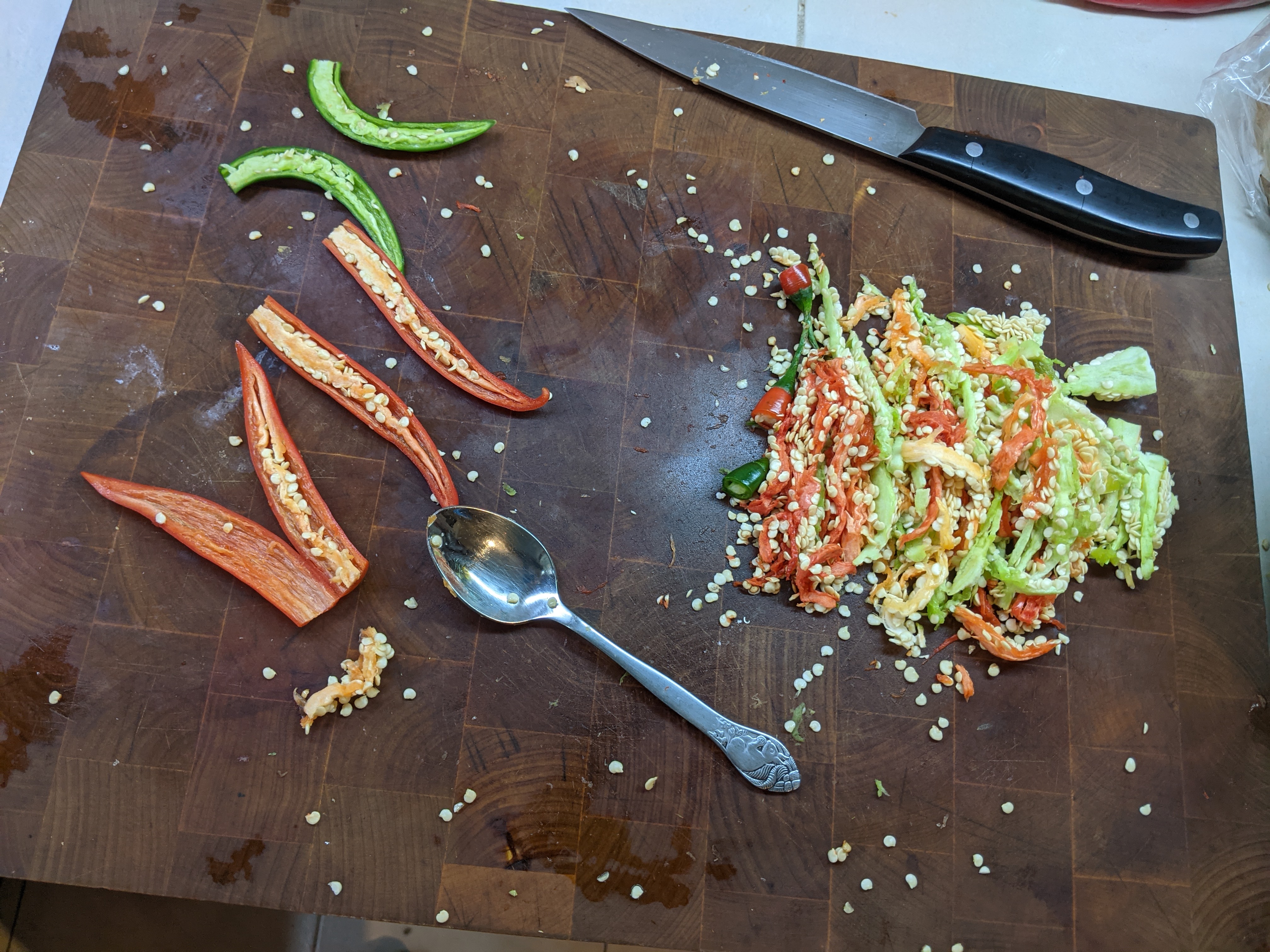
      <li>I suggest seeding some or all of the peppers (the seeds have most of the heat and little of the other flavour in a hot pepper).</li>
      <li>Use gloves when seeding the peppers to avoid a chemical burn.</li>
    </ul>
  </li>
  <li>Roast the cumin seeds and garlic in a dry skillet.
    <ul>
      <li>To roast garlic, heat it with the skin still on, turning occasionally, until the skin is black on all sides.</li>
      <li>To roast tomatillos, remove the outer skin, halve them, and put them on the bottom rack of an oven set to broil until the tops start to blacken.</li>
    </ul>
  </li>
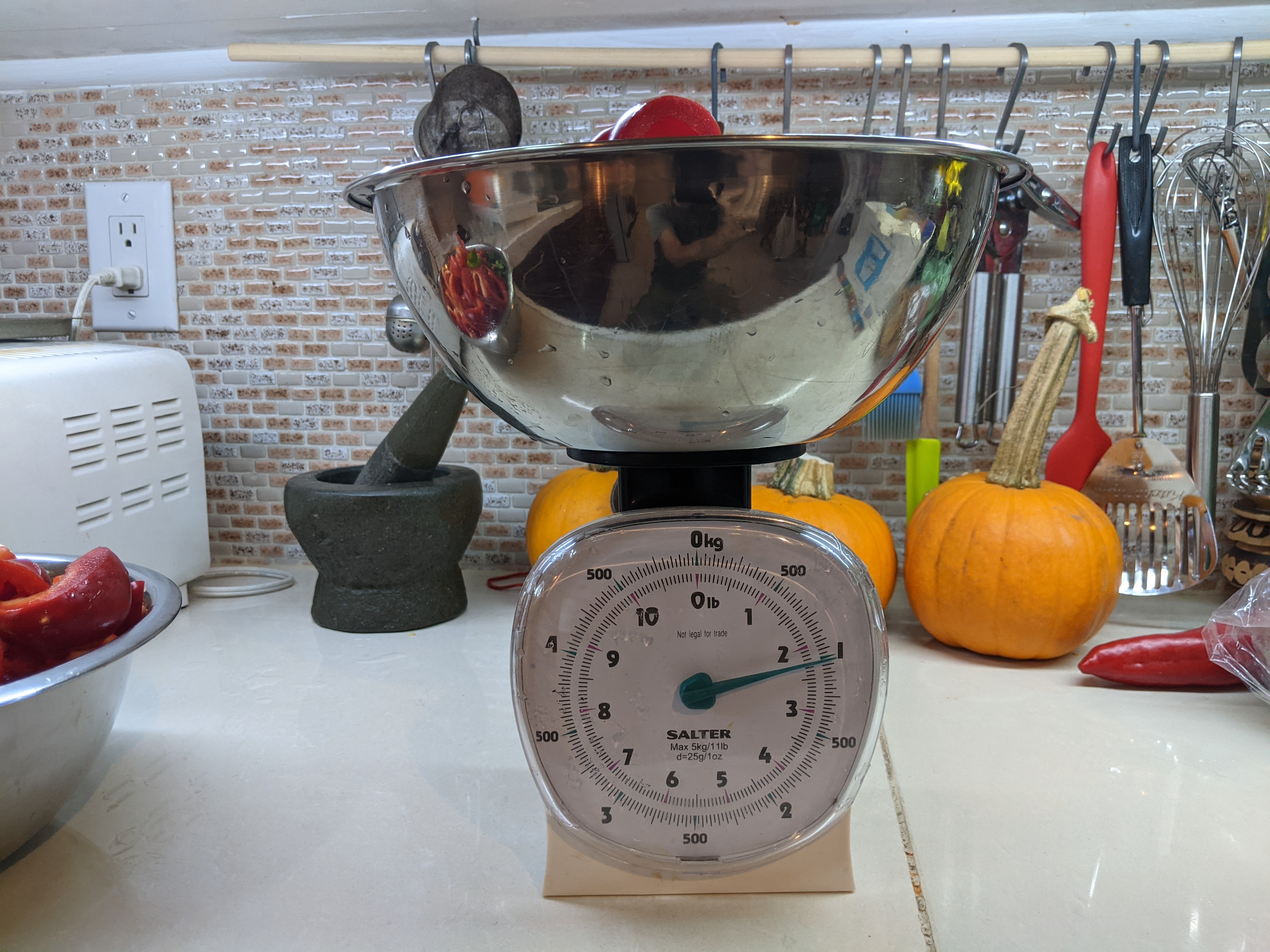
  <li>Weigh the processed vegetables, place everything in a large bowl, and add 1.5 to 2 teaspoons of salt per pound.</li>
  <li>With your hands and wearing gloves again, work the salt into the vegetables ingredients until it’s thoroughly distributed and you see liquid extracted from the vegetables by the salt via osmosis starting to collect in the bottom of the bowl.</li>
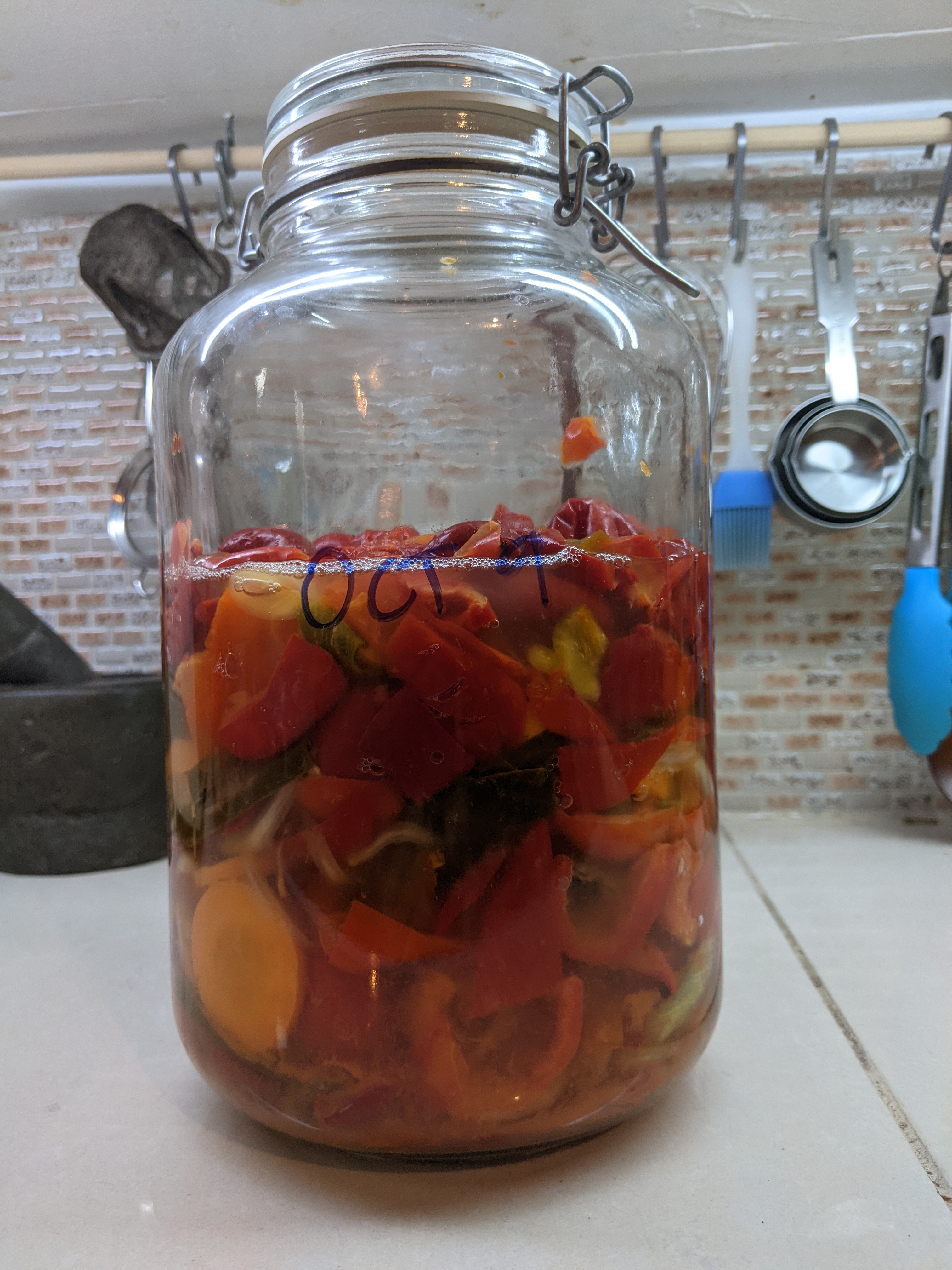
  <li>Place the entire mixture into a large airtight jar, but ensure the jar is not sealed too tightly for air to escape (see below).</li>
  <li>Store the jar at a cool temperature (18-20 degrees) and out of the sun for two to three weeks, or until it tastes sour enough for you. (If it’s too warm the fermentation will happen too quickly and the flavour won’t be nearly as rich.)</li>
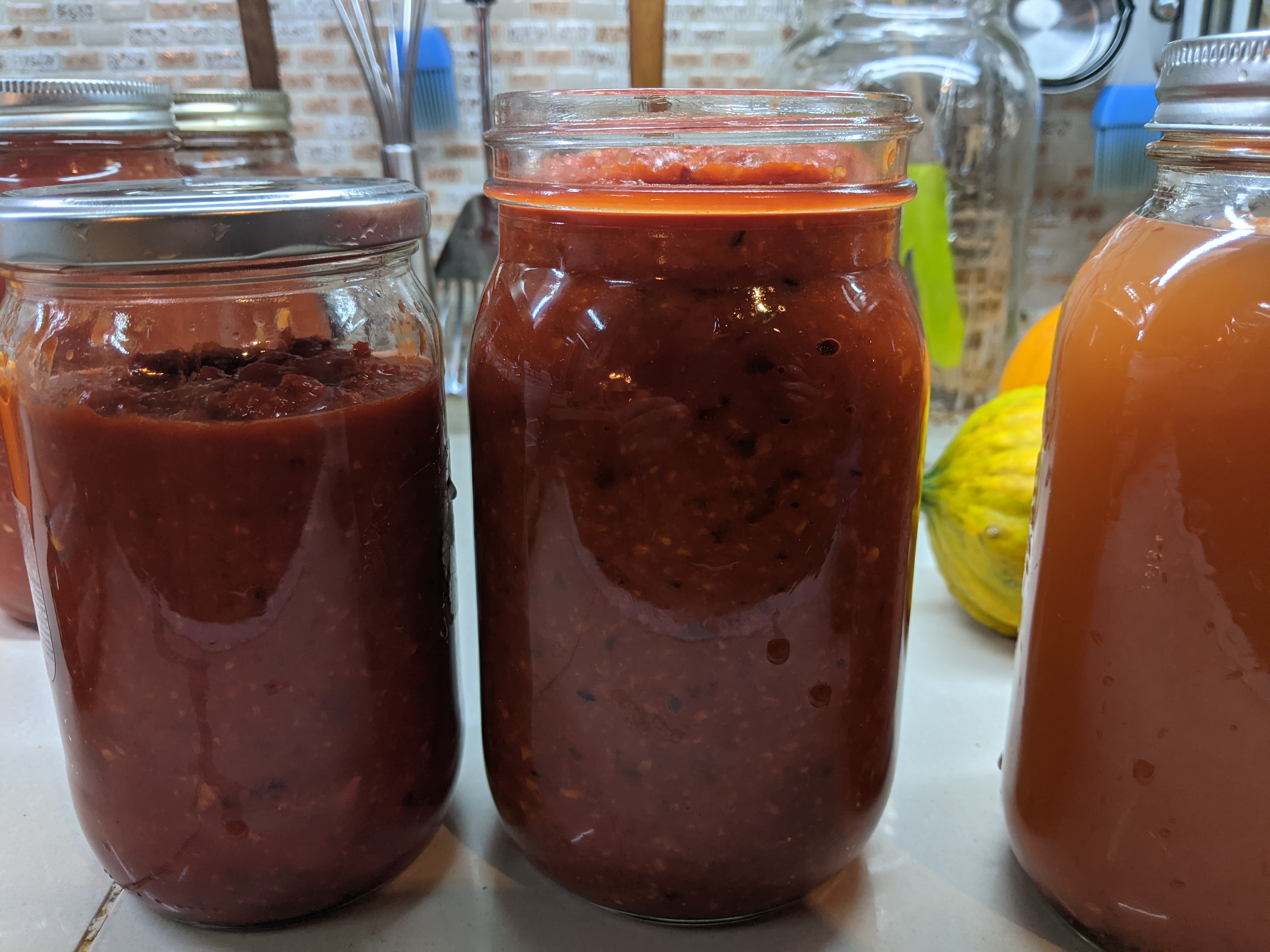
  <li>Drain off the liquid, then blend the remaining solids to make a sauce.</li>
  <li>Store in the fridge and use within four to six weeks (or see note above about citric acid).</li>
</ul>

<h2 id="how-to-control-the-level-of-spice">How to control the level of spice</h2>

<p>Fermentation at room temperature will break down the level of heat in your hot
peppers to the point that after 2-3 weeks there will be little left if you
took the seeds out. This also happens when the finished sauce is in the
fridge, but at a much slower rate. To save time seeding large quantities of
hot peppers and to more easily control the final level of heat I now just
ferment everything else for 2-3 weeks, then add a purée of hot peppers at the
end to taste.</p>

<h2 id="how-to-choose-a-jar">How to choose a jar</h2>

<p>There are many options, from vapour locks used by homebrewers to a simple
plastic lid screwed firmly but not too tight. Any of these will work for lacto
fermentation as long as oxygen from the air doesn’t touch the vegetables but
carbon dioxide produced within the jar can escape. In a day or two you should
see bubbles forming in the jar, and if your lid is tight enough you’ll hear
gas escape if you loosen the lid slightly as a test. If you use a tightly
sealed glass jar, it is possible for the pressure to build to the point where
the jar will burst, so be careful! The easiest solution I’ve found is to just
use any bail lid jar, for example the Fido brand (as suggested by my colleague
Jason, whose home fermentation successes inspired me to try as well).</p>

<h2 id="further-reading">Further reading</h2>

<p>For more on home fermentation in general, a good place to start is <a href="https://www.wildfermentation.com/">Wild
Fermentation</a> by Sandor Katz.</p>

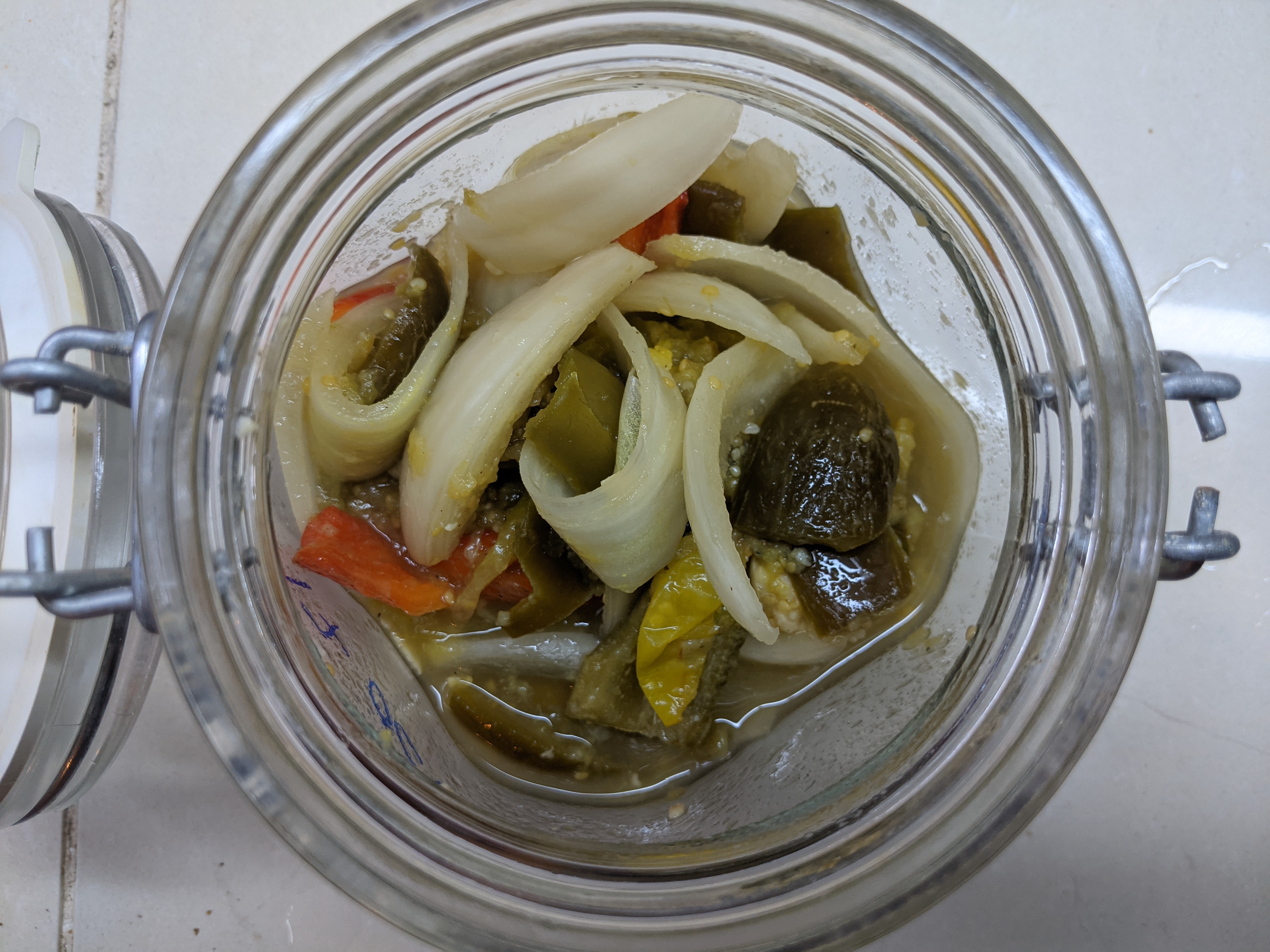
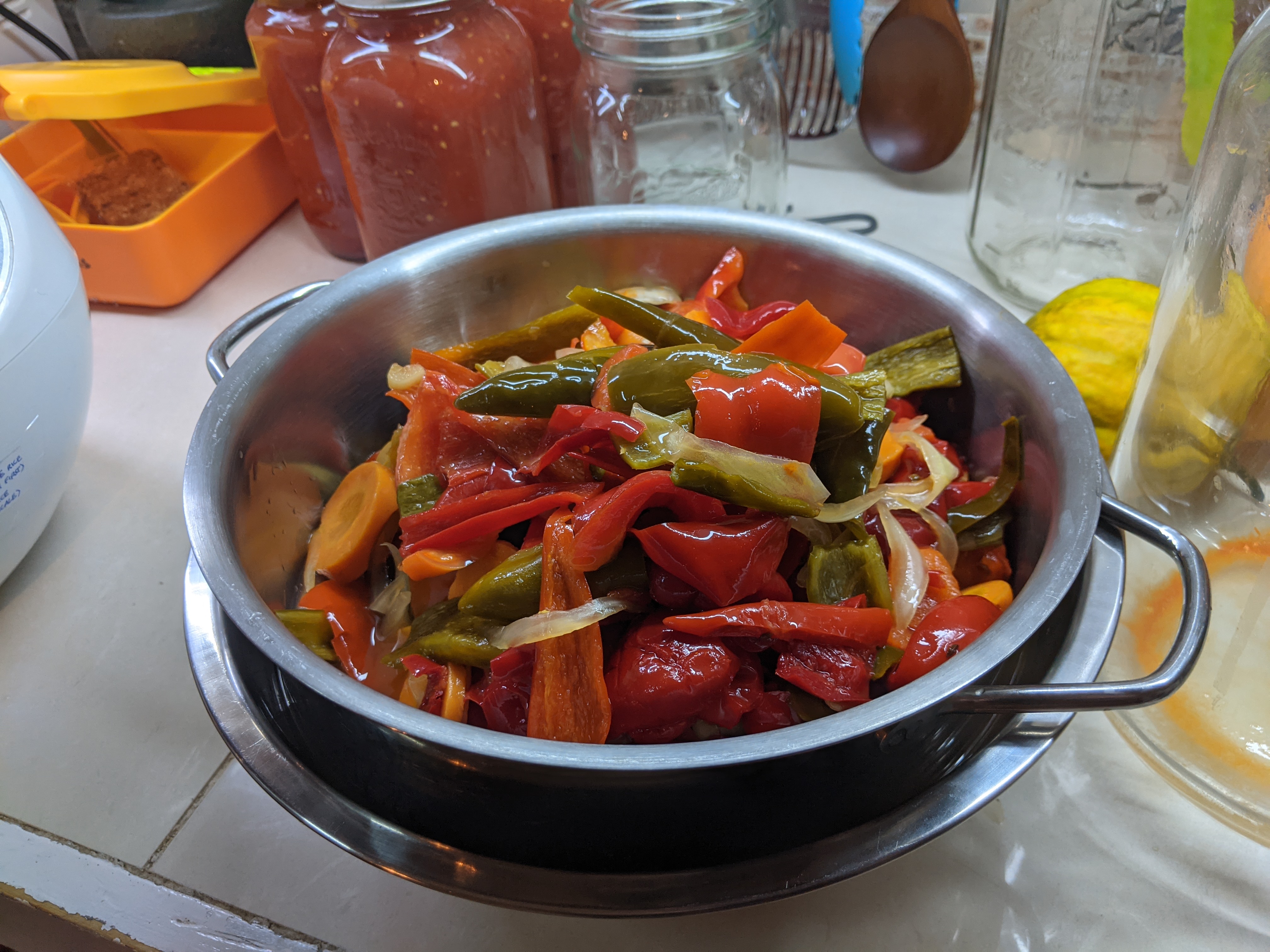
<h2 id="photos">Photos</h2>

<figure class="third ">
  
    
      <a href="/assets/images/peppers-before.jpg">
          <img src="/assets/images/peppers-before.jpg" alt="Peppers, before" />
      </a>


      <a href="/assets/images/peppers-seeding.jpg">
          <img src="/assets/images/peppers-seeding.jpg" alt="Peppers, seeded" />
      </a>


      <a href="/assets/images/peppers-chopped.jpg">
          <img src="/assets/images/peppers-chopped.jpg" alt="Peppers, chopped" />
      </a>


      <a href="/assets/images/peppers-weight.jpg">
          <img src="/assets/images/peppers-weight.jpg" alt="Peppers, weighing" />
      </a>


      <a href="/assets/images/peppers-in-jar.jpg">
          <img src="/assets/images/peppers-in-jar.jpg" alt="Peppers, in jar" />
      </a>


      <a href="/assets/images/peppers-drained.jpg">
          <img src="/assets/images/peppers-drained.jpg" alt="Peppers, drained" />
      </a>


      <a href="/assets/images/peppers-fermented.jpg">
          <img src="/assets/images/peppers-fermented.jpg" alt="Peppers, fermented" />
      </a>


      <a href="/assets/images/peppers-final.jpg">
          <img src="/assets/images/peppers-final.jpg" alt="Peppers, finished" />
      </a>


    <figcaption>Preparing hot pepper sauce
</figcaption>
  
</figure>]]></content><author><name>Matt C</name></author><category term="recipes" /><summary type="html"><![CDATA[This is a simple and flexible fermented hot sauce you can make using hot peppers, bell peppers, carrots, onions, tomatillos, or whatever else you have on hand. I make it only in the fall during harvest season when all these vegetables are plentiful and at their prime at our local farmer’s market, and our basement is cool enough to ferment this properly. Most commercial hot sauce you can buy simulates this sour fermented flavour using vinegar or other acids so that it can be preserved for longer, but once you’ve tried a freshly made batch you’ll see those are only a pale imitation of the real thing. This sauce is an ephemeral pleasure which you should eat within a month or two, unless you add half a teaspoon of powdered citric acid per litre as a preservative, in which case it will last several months in the fridge.]]></summary></entry><entry><title type="html">Homemade yogurt</title><link href="https://doremifaso.ca/yogurt/" rel="alternate" type="text/html" title="Homemade yogurt" /><published>2017-02-28T00:00:00-05:00</published><updated>2017-02-28T00:00:00-05:00</updated><id>https://doremifaso.ca/yogurt</id><content type="html" xml:base="https://doremifaso.ca/yogurt/"><![CDATA[<p>We eat a lot of yogurt in our home, and make it ourselves to save costs. You
can buy cultures such as Yogourmet in most health food stores, but that’s only
slightly cheaper than buying yogurt. Wholesale cultures costs about 1¢/litre,
making the yogurt the same cost as milk (around a third to a half the price ).</p>

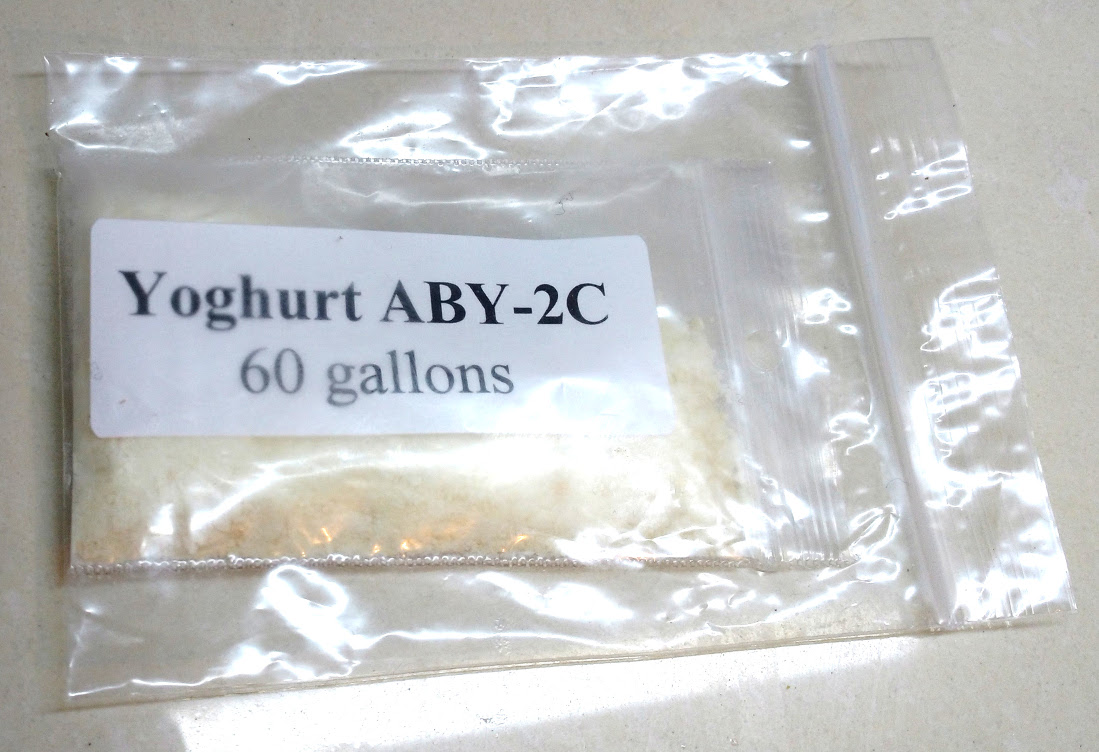
<figure class=" ">
  
    
      <a href="/assets/images/posts/yogurt_culture.jpg" title="Yogurt culture">
          <img src="/assets/images/posts/yogurt_culture_thumbnail.jpg" alt="Yogurt culture" />
      </a>


    <figcaption>Bulk yogurt culture
</figcaption>
  
</figure>

<p>We buy <a href="https://glengarrycheesemaking.on.ca/collections/best-sellers/products/aby2c-yogurt-culture">yogurt culture online from Glengarry Cheesemaking in
Ontario</a>.
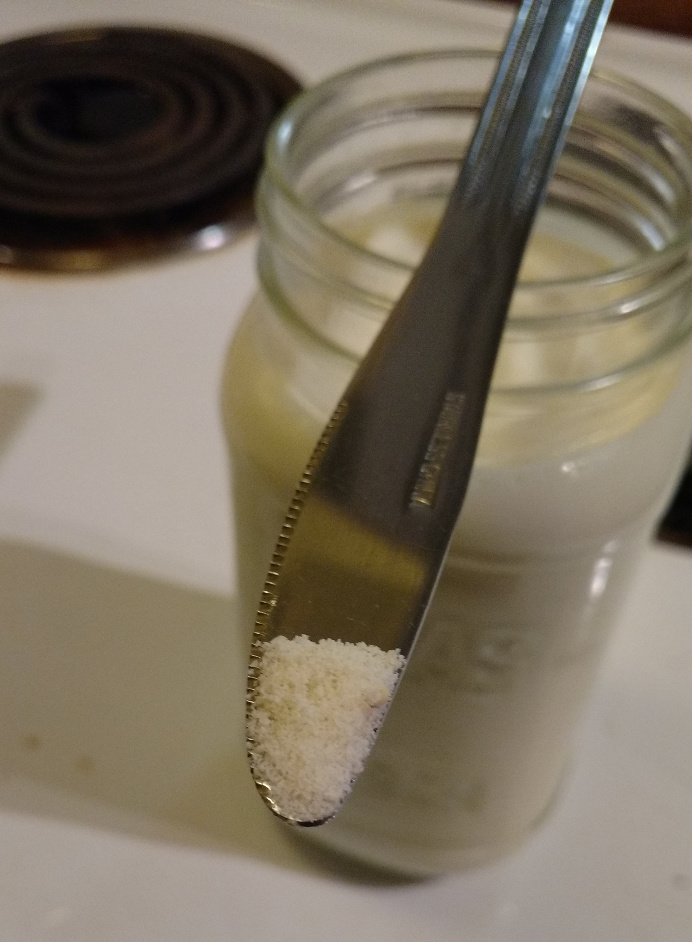
Glengarry sells the culture in packages of 60 grams, and they say to use
1/16 tsp per 2 liters of milk (traditionally called a
<a href="https://en.wikipedia.org/wiki/Pinch_(unit)">pinch</a>). If the yogurt is too
thin for your taste, use more culture or ferment longer; if too thick, use
less culture or ferment for less time. If it doesn’t work at all, you probably
added the yogurt culture when the milk was too hot. This works best using UHT
(ultra high temperature) pasturised milk, sometimes labelled as “stays fresh
longer” on the carton (often this is the cheaper brands), so experiment with
different types of milk from your local store to find the ones that work for
you. The percentage of fat in the milk doesn’t affect the fermentation; you
can even replace some or all of the regular milk with canned condensed milk.</p>

<p>The culture loses effectiveness after about a year in the freezer, but you can
increase the amount to compensate. It’s also possible to strain the yogurt
through cheesecloth to make it thicker.</p>

<h2 id="method-1-stovetop">Method 1: Stovetop</h2>

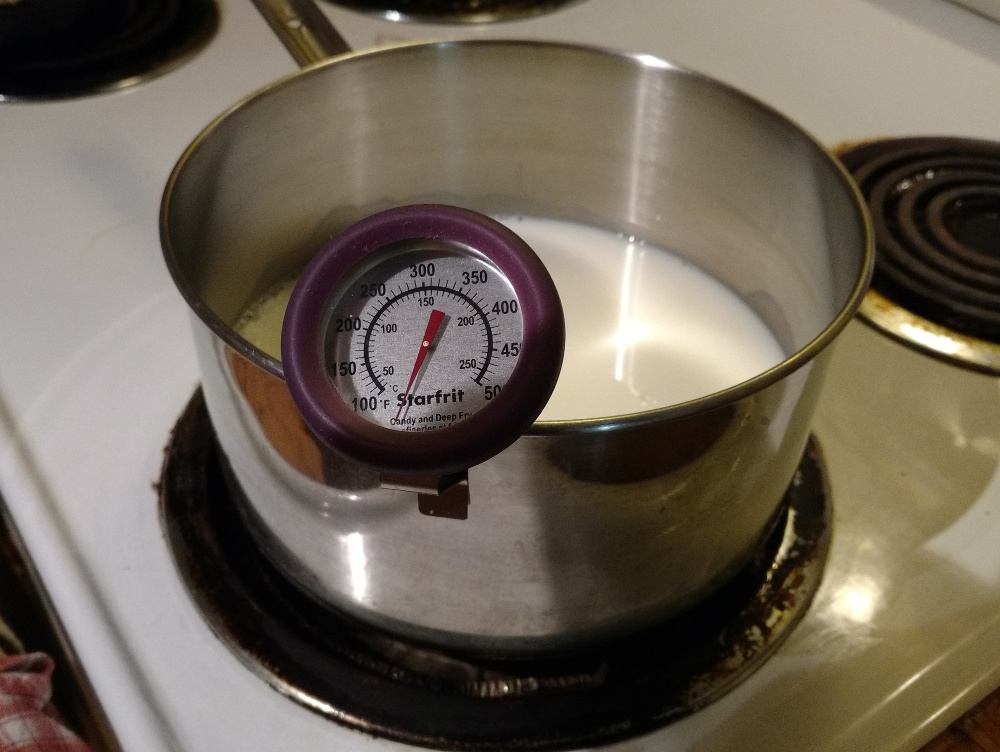
<p>You’ll need a thermometer capable of reading temperatures from 40°C to 85°C,
and a large thermos able to contain the jar you want to make yogurt in with
lots of volume left over.</p>

<ol>
  <li>Heat 2L milk to at least 85°C.</li>
  <li>Allow to cool to between 40°C and 45°C.</li>
  <li>Pour into glass jar and stir in 1/16 tsp of yogurt culture.</li>
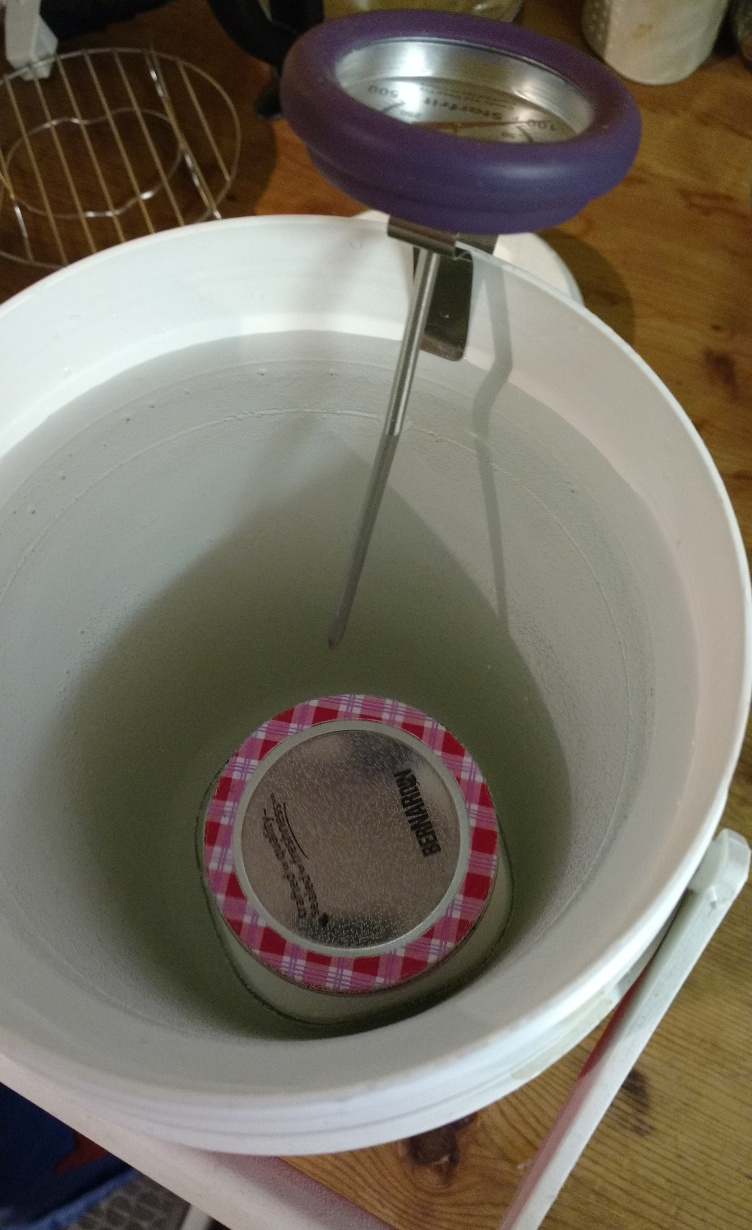
  <li>Place glass jar into a large thermos filled with water at 45°C.</li>
  <li>Let sit at least 4-7 hours (without moving or shaking the container).</li>
</ol>

<figure class="third ">
  
    
      <a href="/assets/images/posts/yogurt1.jpg" title="Milk heating on stove with thermometer">
          <img src="/assets/images/posts/yogurt1_thumbnail.jpg" alt="Milk heating on stove with thermometer" />
      </a>


      <a href="/assets/images/posts/yogurt2.jpg" title="Adding yogurt culture to milk">
          <img src="/assets/images/posts/yogurt2_thumbnail.jpg" alt="Adding yogurt culture to milk" />
      </a>


      <a href="/assets/images/posts/yogurt3.jpg" title="Milk in warm water bath">
          <img src="/assets/images/posts/yogurt3_thumbnail.jpg" alt="Milk in warm water bath" />
      </a>


    <figcaption>Making yogurt on the stove
</figcaption>
  
</figure>

<h2 id="method-2-electric-pressure-cooker">Method 2: Electric Pressure Cooker</h2>

<p>After years of making yogurt on the stove, we bought an <a href="https://instantpot.com/">Instant
Pot</a> model with a yogurt setting. No thermometer or
thermos is needed with this method. You won’t bring the milk to pressure so
it’s a little simpler to use a standard pot lid; <a href="https://instantpot.com/products/instant-pot-6-quart-tempered-glass-lid">Instant Pot sells a glass
lid</a>,
but the standard lid or anything else that fits is fine.</p>

<ol>
  <li>Pour 2L milk directly into the pot.</li>
  <li>Press the “yogurt” button, press the “adjust” button to set to “more” (display will show “boil” instead of a time), and put on the lid.</li>
  <li>When the Instant Pot beeps to let you know the milk is at 85°C, take the inner pot out and let it cool to below 40°C, for example in a sink filled with cold water.</li>
  <li>Stir 1/16 tsp of yogurt culture, and put the pot back into the cooker. (Remove the milk skin on top first if desired.)</li>
  <li>Press the “yogurt” button again, set to “normal”, then set the time to 8:00 or more. (Do not use “less”; this is a lower temperature setting.)</li>
  <li>Let sit at least 4-7 hours (without moving or shaking the pot), or longer.</li>
  <li>Transfer to jars and refrigerate.</li>
</ol>

<h2 id="instructions-from-glengarry-cheesemaking">Instructions from Glengarry Cheesemaking</h2>

<p>For even more precise instructions or for larger batches, consult the
<a href="/assets/docs/Yoghurt YM 492, ABY-2C, Y450 AB.pdf">instructions provided by Glengarry</a>.</p>]]></content><author><name>Matt C</name></author><category term="recipes" /><summary type="html"><![CDATA[We eat a lot of yogurt in our home, and make it ourselves to save costs. You can buy cultures such as Yogourmet in most health food stores, but that’s only slightly cheaper than buying yogurt. Wholesale cultures costs about 1¢/litre, making the yogurt the same cost as milk (around a third to a half the price ).]]></summary></entry><entry><title type="html">2015</title><link href="https://doremifaso.ca/2015/" rel="alternate" type="text/html" title="2015" /><published>2015-01-04T00:00:00-05:00</published><updated>2015-01-04T00:00:00-05:00</updated><id>https://doremifaso.ca/2015</id><content type="html" xml:base="https://doremifaso.ca/2015/"><![CDATA[<p>I have no particular progress on my goals for 2014 to report, but I do have a very clear resolution for this year: to be the best parent I can be to my daughter, who was born in December.</p>

<p>It’s going to be quite a year. Wish me luck, and all the best to you &amp; yours.</p>]]></content><author><name>Matt C</name></author><summary type="html"><![CDATA[I have no particular progress on my goals for 2014 to report, but I do have a very clear resolution for this year: to be the best parent I can be to my daughter, who was born in December.]]></summary></entry><entry><title type="html">2014</title><link href="https://doremifaso.ca/2014/" rel="alternate" type="text/html" title="2014" /><published>2014-01-02T00:00:00-05:00</published><updated>2014-01-02T00:00:00-05:00</updated><id>https://doremifaso.ca/2014</id><content type="html" xml:base="https://doremifaso.ca/2014/"><![CDATA[<p>After an usually relaxed Christmas break, I feel ready to welcome 2014 on this bitterly cold January day (it was -27°C when I woke up this morning). It helps that I’m not due back at work until Monday.</p>

<p>My <a href="/2013">plans for the year</a> turned out alright: I succeeded in my goal to write short reviews here of everything I read in 2013; the total came out to 45 books, which doesn’t count a few children’s books and short graphic novels. I also more or less stopped dressing like I had walked into a Salvation Army store naked with a $10 bill, a step in a long, slow trend towards adulthood (or at least my own interpretation of it).</p>

<p>This year, I aspire to start taking better care of my aging body, regardless of how cliché it may be to resolve to exercise more. We’ll see how well this goal turns out.</p>

<p>Here’s hoping you have a year of joy and hope. As I said to a friend yesterday, may you have all the cake you deserve.</p>]]></content><author><name>Matt C</name></author><summary type="html"><![CDATA[After an usually relaxed Christmas break, I feel ready to welcome 2014 on this bitterly cold January day (it was -27°C when I woke up this morning). It helps that I’m not due back at work until Monday.]]></summary></entry><entry><title type="html">Le routard galactique, par Douglas Adams (1979), traduit par Jean Bonnefoy</title><link href="https://doremifaso.ca/le-routard-galactique-par-douglas-adams-1979-traduit-par-jean-bonnefoy/" rel="alternate" type="text/html" title="Le routard galactique, par Douglas Adams (1979), traduit par Jean Bonnefoy" /><published>2014-01-02T00:00:00-05:00</published><updated>2014-01-02T00:00:00-05:00</updated><id>https://doremifaso.ca/le-routard-galactique-par-douglas-adams-1979-traduit-par-jean-bonnefoy</id><content type="html" xml:base="https://doremifaso.ca/le-routard-galactique-par-douglas-adams-1979-traduit-par-jean-bonnefoy/"><![CDATA[<p>Honnêtement, j’ai lu cela pour la plaisir de découvrir comment on pourrait traduire « ravenous bugblatter beast of Traal » (« hanneton glouton de tron ») ou « pan-galactic gargle blaster » (« arrache-boyaux pan-galactique »). Une de mes raisons de n’avoir pas beaucoup lu en français (autre que le fait que ce me prend pas mal plus d’effort, et je suis parraceux) est que ma vocabulaire littéraire faible me cause de manquer plusieurs mots. Cela ne me dérange pas de tout dans le cas d’une traduction de l’anglais d’un livre que je connais presque par coeur. Lire un livre de comédie traduit de l’anglais ajoute encore une autre couche d’humeur pour moi, pour les mêmes raisons que je considère les versions françaises des chansons du Beatles qui étaient si populaire au Québec durant la révolution tranquille sont drôle en soit. En tout cas, j’ai maintenant lu mon deuxième oeuvre de fiction en français (sans compter un dizaine de bandes dessinées), et je l’ai bien aimé. « Eh, t’as coincé ce padard de Ford Escort ? Voilà un poton qu’a pas perdu sa serviette ! »</p>]]></content><author><name>Matt C</name></author><summary type="html"><![CDATA[Honnêtement, j’ai lu cela pour la plaisir de découvrir comment on pourrait traduire « ravenous bugblatter beast of Traal » (« hanneton glouton de tron ») ou « pan-galactic gargle blaster » (« arrache-boyaux pan-galactique »). Une de mes raisons de n’avoir pas beaucoup lu en français (autre que le fait que ce me prend pas mal plus d’effort, et je suis parraceux) est que ma vocabulaire littéraire faible me cause de manquer plusieurs mots. Cela ne me dérange pas de tout dans le cas d’une traduction de l’anglais d’un livre que je connais presque par coeur. Lire un livre de comédie traduit de l’anglais ajoute encore une autre couche d’humeur pour moi, pour les mêmes raisons que je considère les versions françaises des chansons du Beatles qui étaient si populaire au Québec durant la révolution tranquille sont drôle en soit. En tout cas, j’ai maintenant lu mon deuxième oeuvre de fiction en français (sans compter un dizaine de bandes dessinées), et je l’ai bien aimé. « Eh, t’as coincé ce padard de Ford Escort ? Voilà un poton qu’a pas perdu sa serviette ! »]]></summary></entry><entry><title type="html">Le tour du monde en quatre-vingts jours, par Jules Verne (1873)</title><link href="https://doremifaso.ca/le-tour-du-monde-en-quatre-vingts-jours-par-jules-verne-1873/" rel="alternate" type="text/html" title="Le tour du monde en quatre-vingts jours, par Jules Verne (1873)" /><published>2014-01-02T00:00:00-05:00</published><updated>2014-01-02T00:00:00-05:00</updated><id>https://doremifaso.ca/le-tour-du-monde-en-quatre-vingts-jours-par-jules-verne-1873</id><content type="html" xml:base="https://doremifaso.ca/le-tour-du-monde-en-quatre-vingts-jours-par-jules-verne-1873/"><![CDATA[<p>Encore un autre livre français que j’ai choisi parce qu’il ne me dérange pas de manquer quelques mots. J’ai eu peur que la vocabulaire soit trop vieux mais finalement j’ai trouvé Verne très accessible, comme le Dan Brown de son époque (mais moins poche). Rien n’est subtile ici : pas les intrigues, pas les personnages, pas les stéréotypes ethniques atroces. Un passage en particulier décrit un attentant d’un groupe de Sioux envers un train, dans lequel… mais en fait ça ne me tente pas de copier ce paragraphe. Bon, un livre divertissant quand même. En particulier j’ai apprécié la description de la culture anglaise de point de vue d’un français, et ça me donne envie de lire <em>Vingt mille lieues sous les mers</em>, en livre d’un anti-héros qui combat l’impérialisme depuis son sous-marin fantastique.</p>]]></content><author><name>Matt C</name></author><summary type="html"><![CDATA[Encore un autre livre français que j’ai choisi parce qu’il ne me dérange pas de manquer quelques mots. J’ai eu peur que la vocabulaire soit trop vieux mais finalement j’ai trouvé Verne très accessible, comme le Dan Brown de son époque (mais moins poche). Rien n’est subtile ici : pas les intrigues, pas les personnages, pas les stéréotypes ethniques atroces. Un passage en particulier décrit un attentant d’un groupe de Sioux envers un train, dans lequel… mais en fait ça ne me tente pas de copier ce paragraphe. Bon, un livre divertissant quand même. En particulier j’ai apprécié la description de la culture anglaise de point de vue d’un français, et ça me donne envie de lire Vingt mille lieues sous les mers, en livre d’un anti-héros qui combat l’impérialisme depuis son sous-marin fantastique.]]></summary></entry><entry><title type="html">Paul au parc, par Michel Rabagliati (2011)</title><link href="https://doremifaso.ca/paul-au-parc-par-michel-rabagliati-2011/" rel="alternate" type="text/html" title="Paul au parc, par Michel Rabagliati (2011)" /><published>2014-01-02T00:00:00-05:00</published><updated>2014-01-02T00:00:00-05:00</updated><id>https://doremifaso.ca/paul-au-parc-par-michel-rabagliati-2011</id><content type="html" xml:base="https://doremifaso.ca/paul-au-parc-par-michel-rabagliati-2011/"><![CDATA[<p>Les BD étaient mes premiers livres en français, pour le simple raison que mon français est plutôt oral que littéraire et dans les BD les textes consistent généralement des conversations, et aussi parce qu’il y a souvent une image qui m’aide de déchiffrer un mot que je ne connais pas. Ce livre est le septième de la série <em>Paul</em>, qui a gagné plusieurs prix. Dans cet album, on voit un jeune Paul aux scouts, et en arrière plan, la crise d’octobre. Depuis la publication du premier livre en 1999, la série est extrêmement populaire au Québec est a gagné plusieurs prix. Je ne doute pas que ceci va se vendre si bien que ses antécédents. À ne pas manquer si tu aimes les BD et/ou tu voudrais découvrir la culture québécoise.</p>]]></content><author><name>Matt C</name></author><summary type="html"><![CDATA[Les BD étaient mes premiers livres en français, pour le simple raison que mon français est plutôt oral que littéraire et dans les BD les textes consistent généralement des conversations, et aussi parce qu’il y a souvent une image qui m’aide de déchiffrer un mot que je ne connais pas. Ce livre est le septième de la série Paul, qui a gagné plusieurs prix. Dans cet album, on voit un jeune Paul aux scouts, et en arrière plan, la crise d’octobre. Depuis la publication du premier livre en 1999, la série est extrêmement populaire au Québec est a gagné plusieurs prix. Je ne doute pas que ceci va se vendre si bien que ses antécédents. À ne pas manquer si tu aimes les BD et/ou tu voudrais découvrir la culture québécoise.]]></summary></entry><entry><title type="html">Understanding the Crash, by Seth Tobocman, Eric Laursen, and Jessica Wehrle (2010)</title><link href="https://doremifaso.ca/understanding-the-crash-by-seth-tobocman-eric-laursen-and-jessica-wehrle-2010/" rel="alternate" type="text/html" title="Understanding the Crash, by Seth Tobocman, Eric Laursen, and Jessica Wehrle (2010)" /><published>2014-01-02T00:00:00-05:00</published><updated>2014-01-02T00:00:00-05:00</updated><id>https://doremifaso.ca/understanding-the-crash-by-seth-tobocman-eric-laursen-and-jessica-wehrle-2010</id><content type="html" xml:base="https://doremifaso.ca/understanding-the-crash-by-seth-tobocman-eric-laursen-and-jessica-wehrle-2010/"><![CDATA[<p>Tobocman is about as radical an artist working in comics as you can get, writing books with names like <em>You Don’t Have to Fuck People Over to Survive</em>. Here, he exposes the infamous housing bubble, and together with Laursen &amp; Wehrle explains in simple, accessible language accompanied by stark, memorable graphics just why it happened, who benefited, and what we can all do about it. Even if you’re the sort of person who obsessively follows economics blogs and podcasts like I am, it’s still worth reading for the clear, detailed explanations, and inspirational stories from the front lines of the debt crisis. It’s hard to be both honest and optimistic on this topic, but this book pulls it off by both making you mad and leaving you cautiously hopeful.</p>]]></content><author><name>Matt C</name></author><summary type="html"><![CDATA[Tobocman is about as radical an artist working in comics as you can get, writing books with names like You Don’t Have to Fuck People Over to Survive. Here, he exposes the infamous housing bubble, and together with Laursen &amp; Wehrle explains in simple, accessible language accompanied by stark, memorable graphics just why it happened, who benefited, and what we can all do about it. Even if you’re the sort of person who obsessively follows economics blogs and podcasts like I am, it’s still worth reading for the clear, detailed explanations, and inspirational stories from the front lines of the debt crisis. It’s hard to be both honest and optimistic on this topic, but this book pulls it off by both making you mad and leaving you cautiously hopeful.]]></summary></entry><entry><title type="html">All the Names, by José Saramago (1997)</title><link href="https://doremifaso.ca/all-the-names-by-jos-saramago-1997/" rel="alternate" type="text/html" title="All the Names, by José Saramago (1997)" /><published>2013-12-31T00:00:00-05:00</published><updated>2013-12-31T00:00:00-05:00</updated><id>https://doremifaso.ca/all-the-names-by-jos-saramago-1997</id><content type="html" xml:base="https://doremifaso.ca/all-the-names-by-jos-saramago-1997/"><![CDATA[<p>Saramago published this book at the age of 75, the year before he won the Nobel Prize for Literature. He’s the sort of writer who gets described as “important”, but while I’d heard the name before I’d never read anything by him until now. This novel, about an ageing low level clerk at the central registry of an unnamed city, is the sort of book that would be a perfect candidate for treatment as a slow European film with subtitles and sparse dialogue but a strong sense of place. In fact, it’s almost short enough to be called a novella, and it’s structured like a classic short story, by which I mean that instead of lengthy character development we get people constructed largely out of stereotypes, and a central character who will have time for one episode that permanently changes their outlook on life. Here, we watch our protagonist in his Quixotic extracurricular quest to learn about the private life of a young woman whose file he has come across by accident, in which (unsurprisingly) he learns more about himself than about his erstwhile subject. A fine, literary novel; not what you’d call “fast paced” or “adventure packed”, but this is the sort of thing grad students will still be reading decades from now, as opposed to the supermarket checkout bestseller-of-the-week.</p>]]></content><author><name>Matt C</name></author><summary type="html"><![CDATA[Saramago published this book at the age of 75, the year before he won the Nobel Prize for Literature. He’s the sort of writer who gets described as “important”, but while I’d heard the name before I’d never read anything by him until now. This novel, about an ageing low level clerk at the central registry of an unnamed city, is the sort of book that would be a perfect candidate for treatment as a slow European film with subtitles and sparse dialogue but a strong sense of place. In fact, it’s almost short enough to be called a novella, and it’s structured like a classic short story, by which I mean that instead of lengthy character development we get people constructed largely out of stereotypes, and a central character who will have time for one episode that permanently changes their outlook on life. Here, we watch our protagonist in his Quixotic extracurricular quest to learn about the private life of a young woman whose file he has come across by accident, in which (unsurprisingly) he learns more about himself than about his erstwhile subject. A fine, literary novel; not what you’d call “fast paced” or “adventure packed”, but this is the sort of thing grad students will still be reading decades from now, as opposed to the supermarket checkout bestseller-of-the-week.]]></summary></entry></feed>